

"Prepare, respond, rebuild: taking action when the emergency changes"
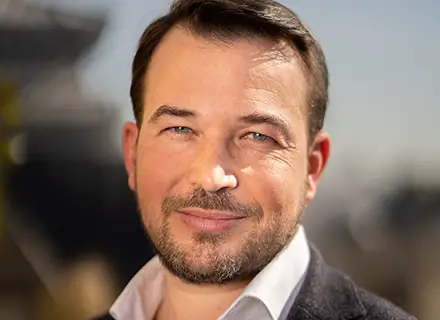 For over forty years, Fondation de France has been involved in emergency operations and has, over time, developed distinctive principles of intervention. As the very nature of crises changes, how can we remain true to these fundamental principles? Alexandre Giraud, Director of Philanthropic Action at Fondation de France, looks back at the history of the foundation’s emergency operations and the challenges that lie ahead: crises that are closer, more frequent, and sometimes more divisive.
In 1985, following the eruption of Nevado del Ruiz in Colombia, the Fondation de France launched its very first emergency operation. Almost forty years later, the emergency has shifted from the exceptional to the recurrent. In 2023 alone, four operations were deployed: Solidarity with Turkey and Syria and Solidarity with Morocco, following the violent earthquakes that struck these countries in February and September; Solidarity with Armenia, in the wake of the military offensive launched by Azerbaijan against the Nagorno-Karabakh enclave on 19 September; and Pas-de-Calais Solidarity, following the historic floods that affected the region in November and December.
Since 1985, Fondation de France has carried out more than fifty emergency operations, and over €200 million entrusted by donors has been committed to helping the people and areas affected. Behind these figures lies, above all, a distinctive way of operating—patiently built up—that we must now adapt to a changing world.
Every major crisis has left a lesson. The tsunami that struck Southeast Asia in 2004 marked a step-change in the scale of Fondation de France’s operations, thanks to fundraising of over €20 million. A year after the disaster, a large proportion of the donations collected in France had not yet been allocated; a constructive debate then ensued across the entire sector. Since then, we have known that the success of a fundraising campaign depends entirely on the quality and pace at which donations are committed.
The earthquake that struck Haiti in 2010 confirmed Fondation de France’s role as a "platform" for transforming the desire to help of thousands of donors into concrete actions right on the ground. Thanks in particular to media mobilisation, €35 million was entrusted to Fondation de France, a portion of which funded around 300 micro-projects led by local stakeholders. Ten years later, the 2020 health crisis led us to forge an unprecedented alliance with AP-HP and the Institut Pasteur in just a few days—"Staying united against the virus", which enabled us to support nearly 1,000 initiatives across the country.
We have learned from every crisis. What sets us apart is not the amount we raise, but the way we operate.
Distinctive principles of intervention
Fondation de France is not an emergency NGO. It empowers those who are already on the ground to take action. Local associations, residents' groups, small and sometimes informal organisations: they are the ones who understand the needs and who will remain once the crisis has passed. In Beirut, for example, in the aftermath of the port explosion in 2020, young volunteers transformed an abandoned petrol station into a meal distribution centre. We supported them. Our entire model hinges on this ability to find trusted partners.
We do not operate everywhere. Two conditions must be met: local actors capable of taking action and sufficient mobilisation of donors. It is the usefulness of our intervention that guides the decision, rather than the intensity of the media-driven emotion. For each operation, we appoint a committee of volunteer experts: humanitarian workers, diplomats, researchers or trauma specialists. The mission of this committee is to assess needs and review requests for support. It decides on the allocation of funds in complete independence.
But what truly sets us apart is our role in guiding the process from the emergency phase to reconstruction. During the first few days, local populations and associations are on the front line, alongside public emergency services. In the weeks that follow, major NGOs provide support on a larger scale. But it is when the cameras leave that the crucial work takes place: rehousing people, reviving economic activity, healing trauma and rebuilding social ties. Our aim is not to establish a long-term presence, but to help local stakeholders initiate reconstruction and then withdraw once the process is underway. In Mayotte, following the passage of Cyclone Chido, a portion of the funds raised through our solidarity campaign was specifically earmarked for reconstruction, over and above the aid provided to meet emergency needs during the initial months. Finally—a key principle—we act in a complementary way to public action, never as a substitute for it, by going where public action does not reach, or does not move fast enough.
Adapting to crises that are closer to home, more frequent, and more divisive
Our principles are enduring and remain relevant, but the terrain on which we apply them is changing profoundly. For a long time, the emergency was elsewhere. Today, our territory is being affected with increasing frequency: Storm Xynthia in 2010, Hurricane Irma in Saint-Martin in 2017, the floods in the Aude in 2018 and in the Pas-de-Calais in 2023, Cyclone Chido in Mayotte in 2024, and then the heatwave and wildfires of summer 2026, which scorched over 116,000 hectares across several regions.
Climate change is also transforming the very nature of the emergency. Floods, cyclones, droughts and fires are becoming more frequent, more intense and sometimes simultaneous, and often strike the same areas repeatedly. The catastrophe ceases to be an accident and becomes a season. The overseas territories are often on the front line of these climate disasters. In these areas, we operate alongside the State and local authorities, making the coordination with public action more crucial than ever.
Finally, we now respond to crises resulting from conflicts, such as in Ukraine since 2022. They raise new questions that we did not previously have to address, since we only intervened in the event of "natural" disasters. An earthquake has no side; a conflict does. The choice of partners and the populations supported can be interpreted as taking a stand, and refraining from doing so is also a choice. Reconstruction becomes unpredictable when fighting drags on or resumes. And in a polarised society, not all causes unite donors. Remaining true to our commitment to impartiality, without foregoing action, is one of our major challenges.
Prevention and preparedness
In the face of these crises, reacting is no longer enough: we must anticipate. That is why crisis and disaster prevention and preparedness have become a central pillar of our strategy, driven by a dedicated action group. This group and our emergency operations form a single cycle: preparing, responding, rebuilding, and then preparing better. The group is building the capacity of the local actors and networks that will carry out the intervention when the time comes. It also supports initiatives to protect populations and ecosystems, particularly to strengthen food security and adapt habitats to the consequences of climate change.
Operation Mayotte Solidarity demonstrated this: because the Fondation de France was already supporting disaster preparedness initiatives there before Chido struck, it was able to mobilise immediately, working with known and reliable partners. Every euro invested in preparedness makes the euro spent on emergency response more effective. And every emergency operation carried out enriches our understanding of the territories, the stakeholders, and their vulnerabilities, in order to strengthen preparedness and prevention.
Ultimately, our approach can be summed up in a few words: never consider the emergency in isolation. We prepare beforehand, we respond during, and we help rebuild afterwards. In a world where crises are occurring closer to home and multiplying, it is this unique model of intervention—grounded in trust in local actors—that gives true meaning to the generosity of our donors.